Grade 6 Alberta Social Studies Full Year of Lessons | Paper and Digital
Grade 6 Alberta Social Studies Full Year of Lessons | Paper and Digital
Couldn't load pickup availability
Alberta Social Studies Grade 6 Full Year Bundle for the New 2025 Curriculum! Teach democracy, government and elections with hands-on activities, projects, and ready-to-teach lessons so you can plan your whole year in minutes. Everything you need is included (and more)!
This unit designed for Alberta teachers includes:
- lesson plans with step-by-step instructions and options for modifications.
- instructions for how to use our activities with and without technology so you can be flexible for your students and classroom environment.
- instructions for printing student workbooks while still offering differentiated options.
- detailed outlines of each activity with a list of materials along with a centralized list and reminders in each section of the lesson plan.
- optional Teacher Slides to support instruction and content delivery. You can choose to teach with or without them.
- vocabulary list with phonetic pronunciations and definitions to help support your students.
- “I can” statements written in student-friendly language so students can self-assess their learning.
- student pages and templates.
- answer keys and suggested answers.
- photos of student examples.
- activities to support learning content specific vocabulary.
- background information for teachers so you don't need to be an expert.
- simple assessments like quizzes. Rubrics are included for teachers to use for marking projects.
- ideas for how to use this resource in the classroom, online, or a mix.
- digital versions of all the student reading and writing pages that use Google Slides. You must download the PDF files and use the access links in the files to get your digital copies.
- an alignment guide for Alberta Outcomes in each resource broken down by lesson and activity.
The unit includes additional bonus materials:
- unit plans and a year plan to assist with sequencing.
- a list of Alberta Social Studies outcomes to help with planning.
- a list of materials outlined for each activity so you can prep materials ahead of time (or with the help of a volunteer).
- vocabulary support materials: word wall words, glossary pages, definition worksheets, digital flashcards (that can be printed in minutes), phonetic pronunciations and definitions.
- extra assessments to assess student learning of each unit that focus on the big ideas.
These resources are included in this unit:
- TIme and Place: Origins of Democracy: Authoritarian rule, Draconian Constitution, direct democracy, social classes in Ancient Greece (citizens, metics, enslaved people), The Ecclesia, The Boule and the Dikasteria, voting in Athens, fundamental principles of democracy: equality under the law, prespresentation, justice and freedom; geographic challenges in Rome compared to Greece, representative decmocracy, social classes in Ancient Rome (patricians, plebeians, enslaved people), the executive (2 consuls), legislative (Senate, Comitia Centuriata, Comitia Tributa, Concilium Plebis, Comitia Curiata) and judicial (judges) branches of the Roman Republic, voting for magistrates in Rome, modern connections to early democracies, comparing democracies; Haudenosaunee Confederacy: the democratic principles and decision-making process, fundamental principles of democracies, the roles of a chief (Hoyaneh) and clan Mother in decision-making, The Grand Council, The Great Law of Peace, consensus; Comparing Democracies Drama Circle: comparing democracies in Athens, Rome and the Haudenosaunee Confederacy; Roots of Democracy: understanding how social classes are an example of inequality; Divine Right of Kings and the Absolute Monarchy; documents and legislation that protected democratic principles: The Magna Carta (1215), The Habeas Corpus Act (1679), The Bill of Rights (1689); pillars of democracy: equality under the law, justice, freedom and representation; All About Democracy Interactive Game: 30 self-checking questions about everything that has been learned in the unit.
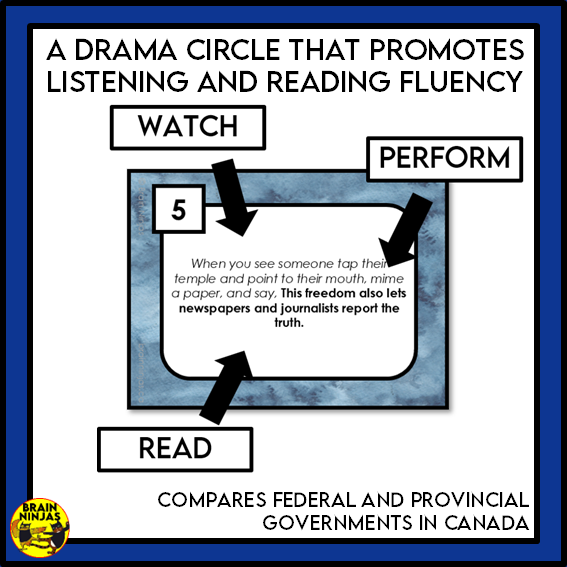
- Systems: Federal Government: reasons for governments; pillars of democracy; structure of the federal government in Canada, British Parliamentary system, prime minister; Member of Parliament (MP); official opposition; how bills are passed; royal assent; Governor General, Constitution Act, 1867; division of responsibilities between federal and provincial governments; judicial independence and its importance; Provincial Government: reasons for governments; pillars of democracy; structure of the provincial and territorial governments in Canada; premier, their role and how they are chosen; Member of the Legislative Assembly (MLA), how they are elected, representing a constituency or riding, duties official opposition; how bills are passed; royal assent in provincial governments; Lieutenant Governor, Constitution Act, 1867 and the division of responsibilities between federal and provincial governments; judicial independence and its importance; Canadian Government Interactive Game: titles and roles in federal and provincial (territorial) governments; prime minister, premier; MLA, Member of the Legislative Assembly, and MP, Member of Parliament *with a nod to MHA, MPP and MNA; House of Commons, Legislative Assembly; Governor General, Lieutenant Governor; official opposition, passing a bill, ridings; judicial independence; principles of democracy; Division of Powers Collaborative Poster: a great introduction or review how how duties and responsibilities are divided between the federal and provincial or territorial governments in Canada; Elections in Canada: provincial, territorial and federal elections; parts of an election: constituency, electoral districts or riding, voters, polling station, ballot, scrutineer, campaign, candidates and election day; creating a political party; a voting simulation activity where students can run as candidates or you can use premade candidates; how to read understand poll results; majority and minority governments; how the premier and prime minister's roles are related to elections
-
Citizenship: Charter of Rights and Freedoms: how the Charter protects everyone in Canada, not just citizens; Canadian Constitution; fundamental rights and freedoms; individual and collective rights; limits of the Charter; discrimination and groups that still face it (antisemitism, Islamophobia); comparing the Charter of Rights to the United Nations Universal Declaration of Human Rights; hypothesizing new freedoms, rights and responsibilities for Canadians; justifying rights and freedoms found in the Charter of Rights; Charter of Rights and Freedoms Drama Circle: this reviews the outcomes listed above; Civic Participation: identifying issues that require civic action and participation; formal and informal ways to participate in communities; why democracy needs civic participation; how civic participation helps community sustainability; how small actions can create big movements; planning a civic action project; working with community partners and organizations
Ninja Note: If you teach in Alberta, this resource has been written for the new social studies curriculum. Learn more about how we're writing and adjusting resources for the new curriculum. https://brainninjas.ca/social-studies-in-alberta/
This activity aligns with:
- the Alberta Social Studies Curriculum Grade 6 ©2025
Looking for more social studies for Alberta teachers? Our unit plans include extra vocabulary supports and assessments.
- Full Year of Grade 3 Alberta Social Studies Lessons
- Full Year of Grade 4 Alberta Social Studies Lessons
- Full Year of Grade 5 Alberta Social Studies Lessons
- Full Year of Grade 6 Alberta Social Studies Lessons
Ninja Note: This file is a ZIP file. It requires downloading and extracting before opening the individual PDF files. Each resource contains the digital links and instructions for using the file.
Have a question? Before contacting us, check our Frequently Asked Questions page.